















Experiencing the living impact and ‘farm-to-closet’ philosophy of Sukkhacita in Central Java with Rolex
By The Time Place Magazine
For nearly a century, Rolex has celebrated those who dare to look beyond limits—explorers, scientists, and visionaries driven not just by discovery, but by purpose. Continuing that legacy, the Rolex Perpetual Planet Initiative was established to support individuals dedicated to preserving the fragile balance of our world. At its heart lies the Rolex Awards, which recognise changemakers whose ideas create lasting impact for communities as well as the environment.
Among the five Laureates of the 2023 Rolex Awards is Denica Riadini-Flesch from Indonesia. At the regional awarding ceremony held in Singapore last year, she took the stage with the poise and conviction of someone who truly understands both the science and soul of change. With an impressive background in development economics and years of experience in impact-driven work, she spoke eloquently about SukkhaCitta—the social enterprise she founded to regenerate Indonesia’s rural communities through sustainable farming, ethical craft, and women’s empowerment. Every word she uttered carried weight. It was easy to believe her, and even easier to be moved by her vision.
Yet this year, that belief was transformed into something far more tangible. Together with Rolex, we travelled to Central Java to witness Denica’s impact beyond the stage, stepping into the living ecosystem she and her team have built: a world where every thread carries purpose, every hand preserves heritage, and every choice restores the planet.
Rumah SukkhaCitta follows the rhythm of the land, learning the delicate choreography between soil, seed, and season. This is where SukkhaCitta’s philosophy takes root—quite literally. As Denica explains, “You don’t go to school to become an artisan. These are living traditions, passed from mothers to daughters, from one pair of hands to another.”
Each of SukkhaCitta’s five “schools” situated across the archipelago serves as both a sanctuary and a seedbed of revival—teaching women not only the skills of their ancestors, but also how to earn a dignified living from them. The journey brought us to their very first Rumah SukkhaCitta in Ambarawa, where the team works with local farmers and artisans across every stage of making, from batik and natural dyeing to stitching and beyond.
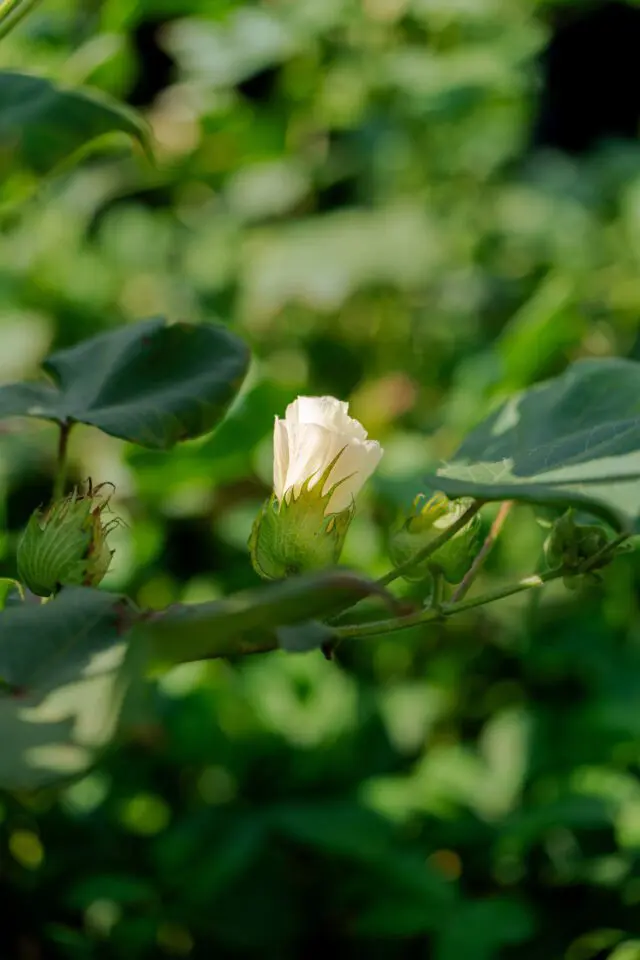
Our time there in August coincided with the harvest season. Under the clear Javanese sky, cotton plants stood tall amid rows of peanuts, pumpkins, and corn. Here, farming mirrors a forest—diverse, self-sustaining, alive. Through the tumpang sari method, the soil heals itself, harvests multiply, and nothing is taken without giving something back. “Just doing less harm is no longer good enough,” shared Bertram Flesch, SukkhaCitta’s Chief Operating Officer. “We must repair, restore, and regenerate.”
The cotton, grown without pesticides or irrigation, thrives on balance rather than control. Farmers here no longer rely on chemical fertilizers; instead, they nurture soil that breathes and retains water naturally. With Rolex’s support, SukkhaCitta is now transforming this ancient wisdom into open-source knowledge through a digital app, allowing farmers in different islands of the country to learn the science of regeneration and keep their heritage alive.
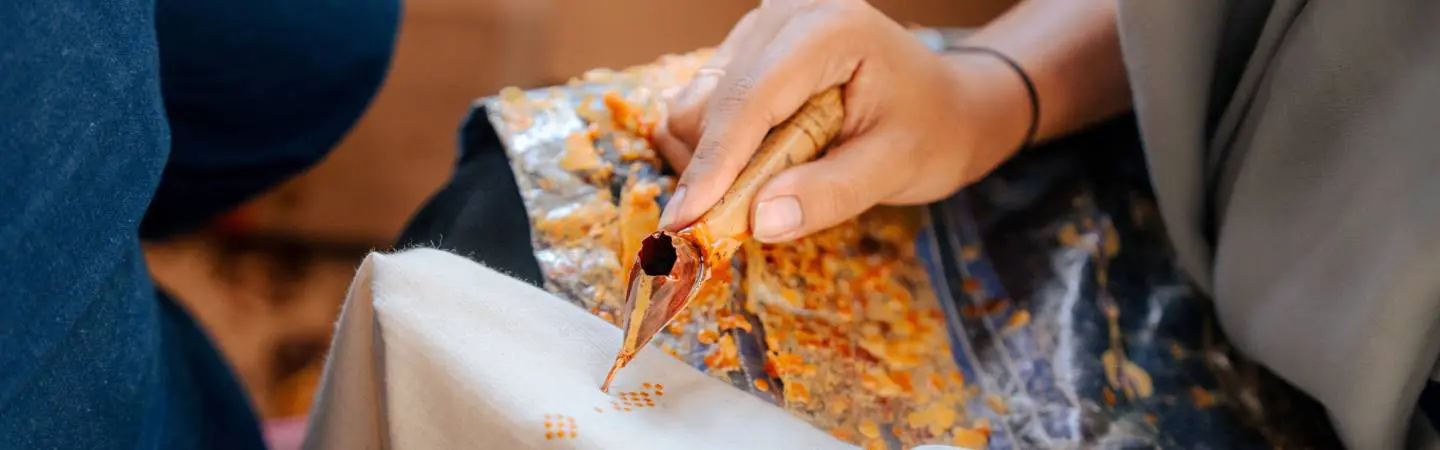
From the fields, we stepped into the batik workshop. Here, each artisan’s hand moved with quiet precision, tracing pencil sketches on fabric woven from cotton harvested nearby, using molten organic wax made from damar resin and applied with the delicate tjanting. “Half-filled,” smiled Ibu Tur, one of the artisans, demonstrating her steady hand, “so it doesn’t spill when you tilt.” The rhythm was almost meditative—dip, breathe, draw—an art form that demands patience and an instinct honed through years of practice.
As Denica reminded us, “Batik is not about motifs, it’s about process.” The wax resists dyes through repeated immersion, allowing artisans to create any pattern they imagine and challenging the notion that batik is confined to ethnic motifs. That day, we crafted delicate squares forming the North Star—SukkhaCitta’s signature Angkasa design—using time-honoured batik techniques.
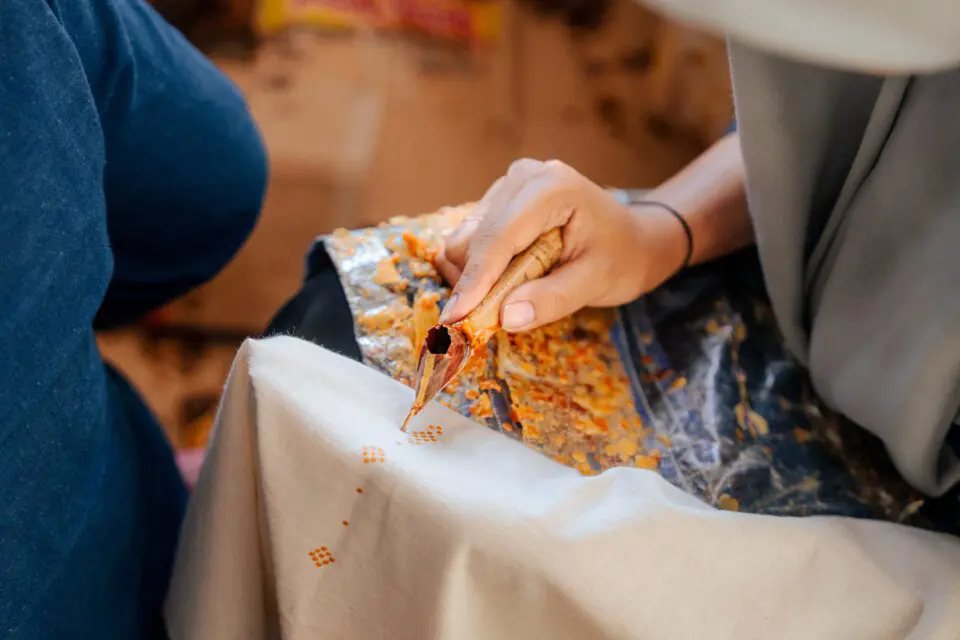
Guided by Ibu Tur, who first came to Rumah SukkhaCitta without any experience in batik, we learned the patience and precision the craft demands. Through years of practice, she has transformed from a curious learner into one of their most skilled artisans, now training other women to master the same art. With calm assurance, she helped us find our rhythm, sharing with quiet pride how her work now allows her to support her family while keeping alive a tradition that once seemed on the verge of fading.
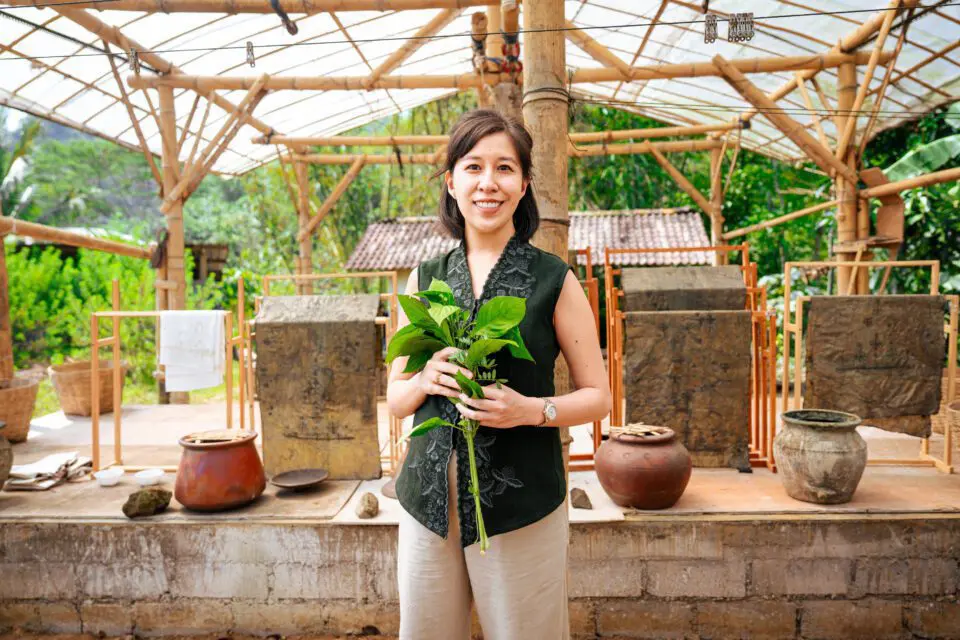
Beside the workshop, a lush garden of indigo bushes shimmered in sunlight. “Colour,” Denica said, “is the first thing we reach for when we choose what to wear. But we’ve forgotten where it comes from.” That question led her on a long search for a gentler way to bring colour back to life. Through research and collaboration with farmers, she discovered that the secret had always been in the plants.
Today, more than a hundred farmers grow it in mixed agroforestry systems around the villages. From the garden to the dye house, the process unfolded like quiet science. Leaves were soaked in large vats, fermenting slowly until the water turned deep blue and the pigment settled into a thick paste. Yet the true magic began in what SukkhaCitta calls the Sweet Indigo™ process, a breakthrough where coconut sugar replaces synthetic chemicals to “awaken” the colour from its slumber and bring it to life.
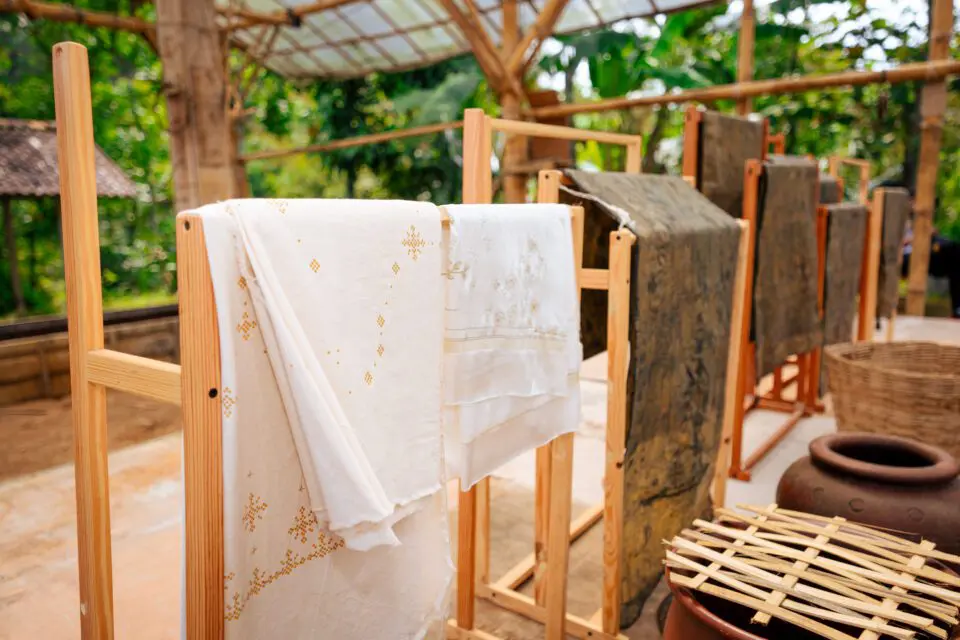
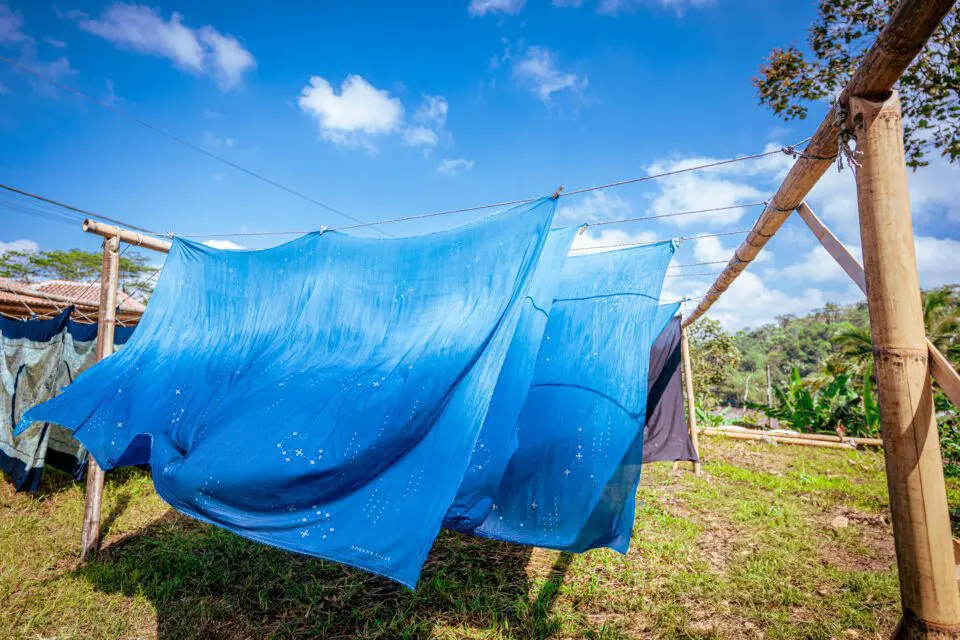
Layer by layer, fabric was dipped and dried, shifting from white to sky, ocean, and midnight. It takes around 20 dips to achieve the deep indigo shade of Denica’s own vest, before finally being over-dyed with yellow from the golden fruits harvested once a year. Through this living palette of dyes, SukkhaCitta shows that colour can do more than adorn. It can heal, empower, and give life back to the land it comes from.
The hum of sewing machines greeted us as we stepped into SukkhaCitta’s Stitching & Upcycling facility. Around us, women worked in quiet harmony: drafting patterns, cutting cloth, stitching pieces together. Here, nothing is wasted—only transformed. “We believe there should be no waste,” shared Creative Director Anastasia Setiobudi, as she guided us through rows of patchwork coasters and reimagined garments stitched from what once were offcuts.
Every remnant of fabric finds a new form; every piece carries a lifetime warranty. When a garment fades, it is not considered useless and discarded but returned to be repaired or renewed. We saw this circular promise come to life in the form of a faded Kupu Kimono—one of SukkhaCitta’s earliest designs—carefully laid aside to be redyed at a customer’s request, ready to begin its next chapter.
Sustainability might have become an industry buzzword, but at Rumah SukkhaCitta it is about making with meaning—not as an abstract ideal, but as living practice. Here, fashion doesn’t begin in a sketchbook nor does it end in a store. It begins in the soil, flows through human hands, and circles back to the earth that sustains it.
Yet Riadini-Flesch’s work is far from over. Being part of the Perpetual Planet Initiative through her Rolex Award will give her the chance to amplify the work of SukkhaCitta. “The amazing thing about Rolex is that they give you a mic. They let you speak about the things that you really believe in, to inspire others to do the same. It’s embedded in the Rolex DNA, to support pioneers,” Denica shared enthusiastically.
With this support from Rolex, she plans to triple the number of craft schools. By 2030, she aims to impact 10,000 lives and regenerate 1,000 hectares of land. She is also launching an app containing the digitized curriculum of SukkhaCitta, allowing the project to reach women even in Indonesia’s most remote communities, on different islands, and speaking different dialects. Together, these efforts mark not just growth, but a blueprint for how a fashion movement can reshape both livelihoods and landscapes.
#ReadAnywhere the latest issue of The Time Place Magazine